• Gift Hospitality & Culinary Institute

    Gift Hospitality & Culinary Institute was founded with a simple but powerful idea: hospitality is one of the greatest gifts we can offer the world. What began as a vision to nurture practical skills in the hospitality industry has grown into a dynamic training institute dedicated to shaping professional chefs, hospitality managers, and service specialists. 


    Established to respond to the growing demand for skilled professionals in hotels, restaurants, catering companies, and tourism enterprises, the institute blends hands on training with modern hospitality knowledge. Students are immersed in real world culinary practice, customer service excellence, and hospitality management principles that reflect the standards used across the global hospitality industry.

    At Gift Hospitality & Culinary Institute, learning is designed to be practical, creative, and industry driven. From culinary arts and pastry making to food and beverage service and hospitality management, the programs equip students with the confidence, discipline, and professionalism required in today’s competitive hospitality sector.

    Our Mission
    To train competent, creative, and ethical hospitality professionals through practical education, innovation, and industry focused learning.

    Our Vision
    To become a leading hospitality and culinary training institute in Africa, recognized for excellence in professional hospitality education and service leadership.

    Our Core Values
    Professionalism
    Creativity and Innovation
    Service Excellence
    Integrity
    Continuous Learning

    Contact Information

    Gift Hospitality & Culinary Institute
    Hospitality Training Centre
    Ngong Road, Nairobi, Kenya

    Phone: +254 712 845 390
    Email:info@gifthospitalityinstitute.ac.ke
    Website:www.gifthospitalityinstitute.ac.ke

    Office Hours
    Monday to Friday: 8:00 AM – 5:00 PM
    Saturday: 9:00 AM – 1:00 PM

    • Opened: Saturday, 27 June 2026, 7:00 AM
      Closed: Saturday, 27 June 2026, 7:30 AM
      1. Which type of protein dish is prepared mainly from meat?

      A. Vegetable stew
      B. Beef stew
      C. Fruit salad
      D. Pumpkin soup


      2. Which knife is mainly used for peeling fruits and vegetables?

      A. Chef's knife
      B. Bread knife
      C. Paring knife
      D. Cleaver


      3. Which nutrient is mainly responsible for body building and repair?

      A. Carbohydrates
      B. Proteins
      C. Vitamins
      D. Minerals


      4. Which type of stock is prepared from fish bones?

      A. Brown stock
      B. White stock
      C. Vegetable stock
      D. Fish stock


      5. Which cooking method is suitable for preserving nutrients in vegetables?

      A. Deep frying
      B. Steaming
      C. Roasting
      D. Grilling


      6. Which of the following is a mother sauce?

      A. Tomato sauce
      B. Chili sauce
      C. Soy sauce
      D. Oyster sauce


      7. Which equipment is used to measure liquid ingredients accurately?

      A. Measuring cup
      B. Rolling pin
      C. Whisk
      D. Sieve


      8. Which food poisoning bacteria is commonly associated with improperly stored food?

      A. Salmonella
      B. Yeast
      C. Mold
      D. Lactobacillus


      9. Which type of protein dish is prepared from eggs?

      A. Beef stew
      B. Omelette
      C. Grilled fish
      D. Roast chicken


      10. Which method of heat transfer involves direct contact?

      A. Radiation
      B. Convection
      C. Conduction
      D. Reflection


      11. Which personal hygiene practice should food handlers observe?

      A. Wearing dirty aprons
      B. Washing hands regularly
      C. Working while sick
      D. Keeping long fingernails


      12. Which type of menu offers a limited number of dishes at a fixed price?

      A. À la carte menu
      B. Cyclic menu
      C. Table d'hôte menu
      D. Buffet menu


      13. Which ingredient is used as a thickening agent in soups and sauces?

      A. Salt
      B. Sugar
      C. Cornstarch
      D. Vinegar


      14. Which type of pastry is used to make éclairs and cream puffs?

      A. Shortcrust pastry
      B. Puff pastry
      C. Choux pastry
      D. Flaky pastry


      15. Which method of preserving food involves removing moisture?

      A. Drying
      B. Refrigeration
      C. Freezing
      D. Canning


      16. Which cut of vegetables produces long, thin strips?

      A. Julienne
      B. Brunoise
      C. Dice
      D. Chiffonade


      17. Which type of service allows customers to serve themselves from a variety of dishes?

      A. Silver service
      B. French service
      C. Buffet service
      D. Plate service


      18. What is the main purpose of blanching vegetables?

      A. To add flavor
      B. To soften and preserve color
      C. To dry vegetables
      D. To remove nutrients


      19. Which factor should be considered when planning meals?

      A. Nutritional value
      B. Cost of ingredients
      C. Dietary requirements
      D. All of the above


      20. Which of the following is an example of a plant-based protein dish?

      A. Beef steak
      B. Fried chicken
      C. Bean stew
      D. Grilled fish

Available courses

Course Overview:

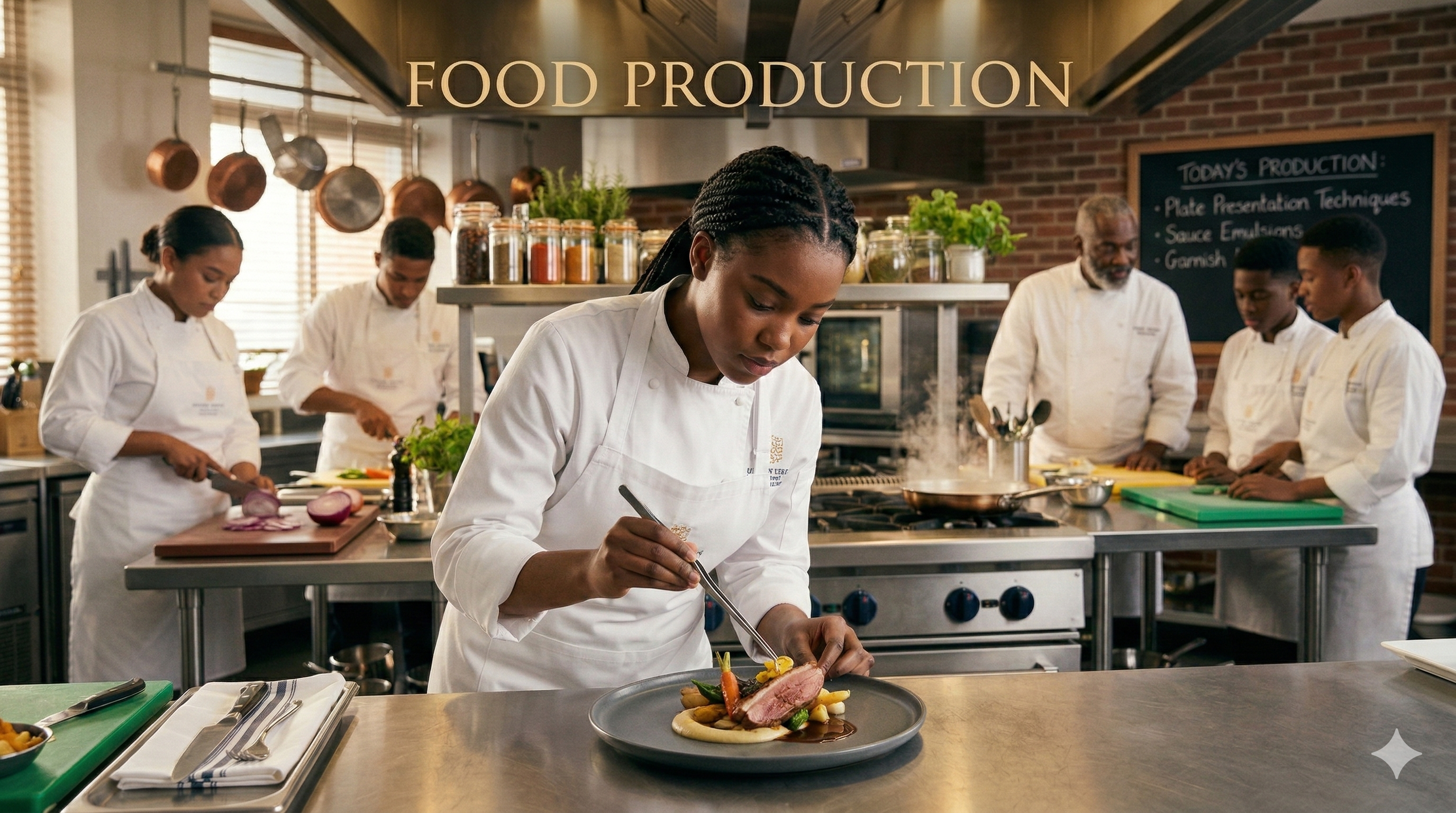
This course equips learners with the practical skills and theoretical knowledge required to produce high-quality food in professional kitchens. It covers food preparation techniques, cooking methods, food safety, menu planning, and production management. Students will gain hands-on experience while learning industry best practices for efficiency, quality, and hygiene.


Course Duration:

12–16 weeks (Adjustable based on institution schedule)


Course Learning Objectives:

By the end of this course, learners will be able to:

  1. Demonstrate safe and hygienic food production practices.

  2. Prepare a wide range of dishes using various cooking techniques.

  3. Plan and manage food production processes in a professional kitchen.

  4. Apply nutritional principles in menu design and food preparation.

  5. Monitor quality control and portion management in food production.

  6. Work effectively as part of a kitchen team.

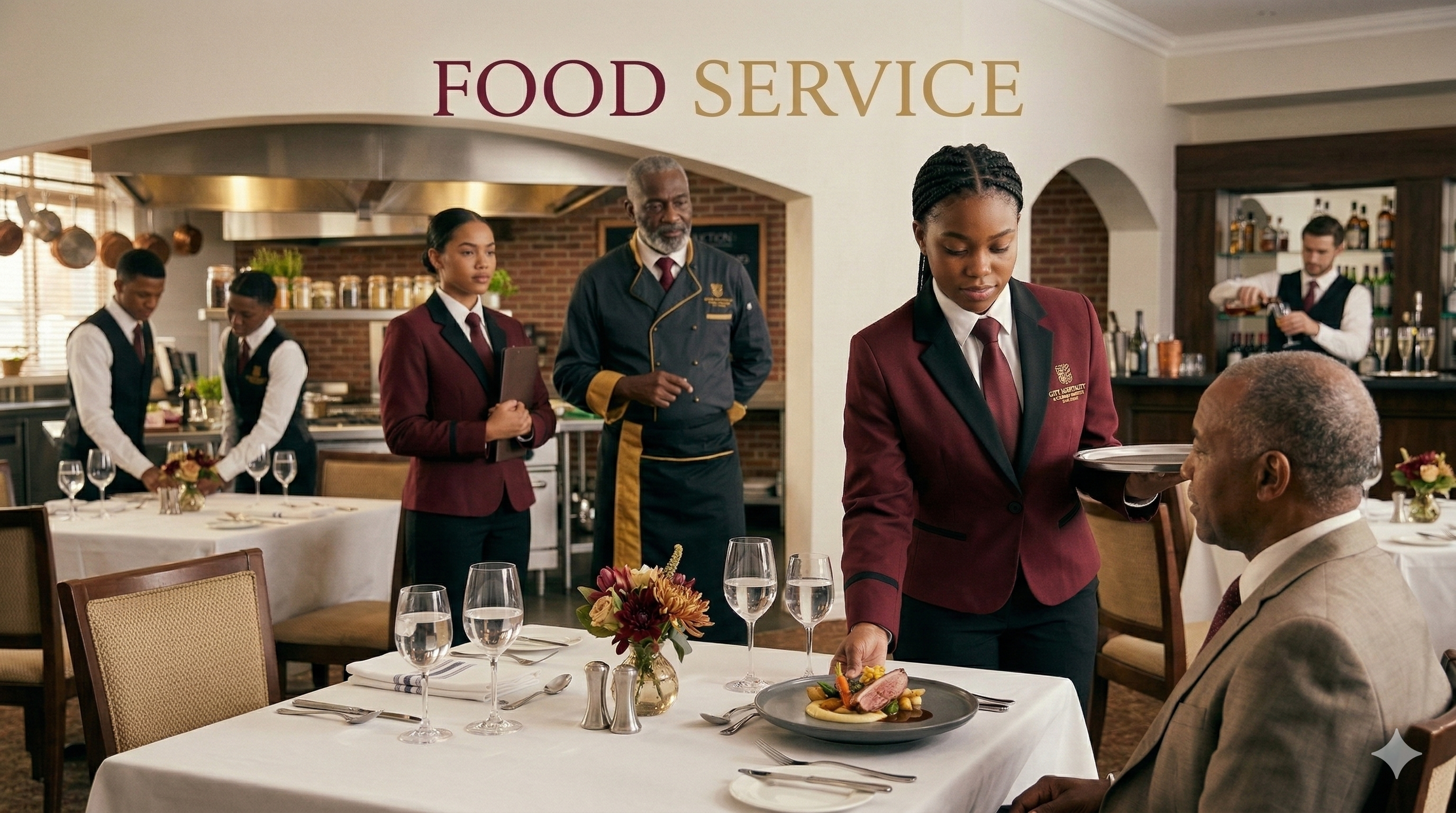
This course introduces learners to the core principles of professional food service and basic culinary practice. Students develop practical kitchen skills, understand food safety, practice service etiquette, and explore how hospitality operations run in real environments such as restaurants, hotels, and catering establishments. By the end of the course, learners gain both technical competence and professional discipline expected in the hospitality industry.